Bearing Check is a newsletter about the work of leading operations — the decisions, the dynamics, and the moments where alignment, collaboration, and trust either hold or don't.
Published biweekly, each issue draws on research and real experience to explore what makes complex organizations move well, and what gets in the way. The goal isn't to give you a checklist. It's to give you a sharper way of looking at the challenges you're already navigating

The Values Advantage: Why High Performers Act With Clarity When Conditions Change
Leaders can work to stabilize a process, a system, or an entire organization, but the internal and external conditions around it continue to shift. When disruption arrives, the people closest to it must often decide how to respond before anyone above them can weigh in. In organizations where values are clear, those people are prepared to make that decision.

Lessons on Development from an AF Reunion
Mentoring does not always require a formal setting, but it does require contacts, time, trust and an expectation that useful knowledge will not stop with one person.

What Are You Optimizing Away?
A company’s enterprise value includes assets that never appear on a balance sheet - not explicitly anyway: reputation, organizational and market trust, product quality, workforce expertise, and operational resilience. Organizational trust is manifested in employees willing to raise a problem knowing they won’t be penalized, and that the issue will be taken seriously. Such assets take years to build, and they can be depleted very quickly.
Readiness Is Not a Milestone
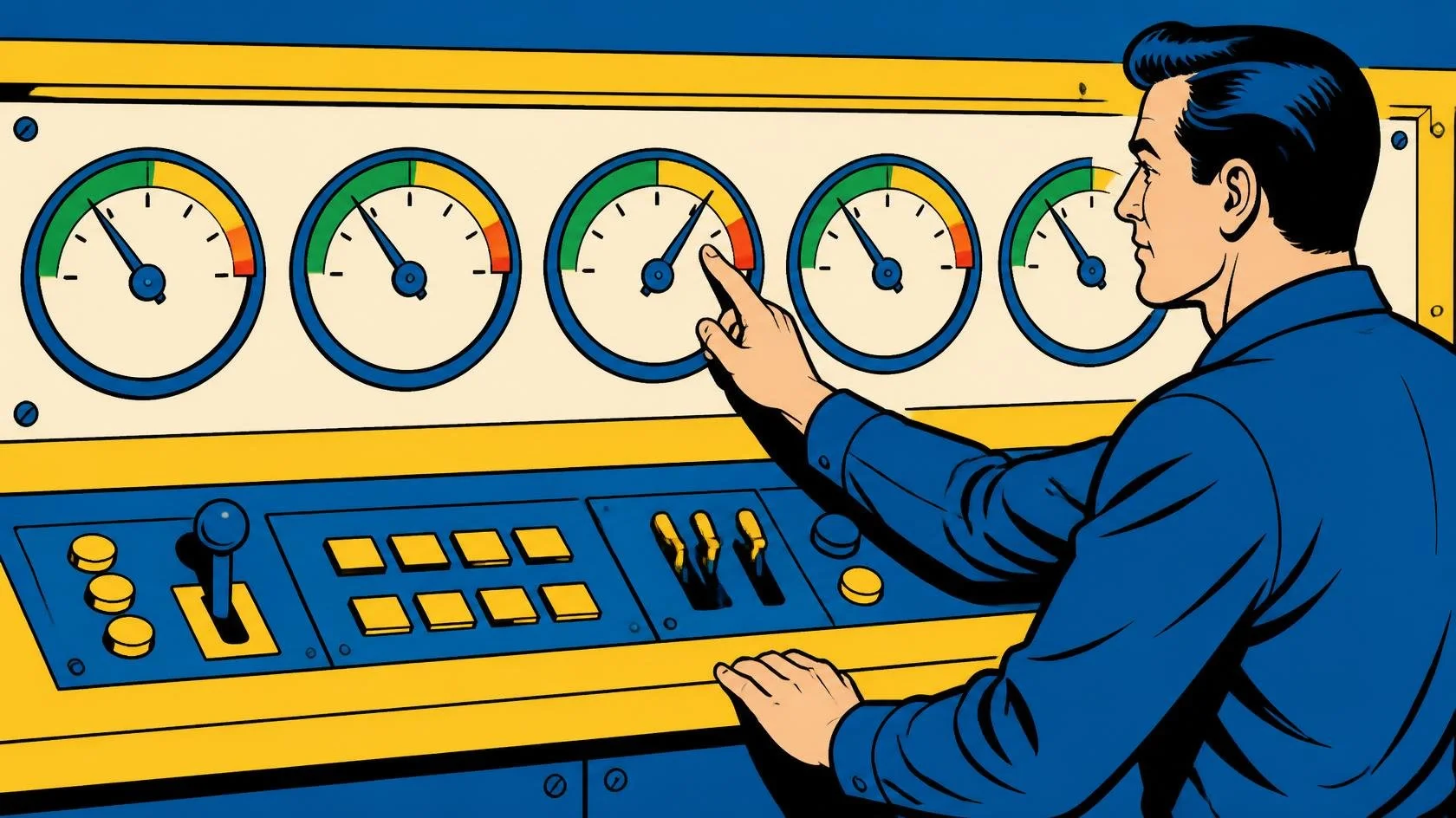
Readiness deserves far more attention than it often receives. It is not another project milestone, a steering committee approval, or a green status indicator on a dashboard. Demonstrated readiness looks like a workflow that has been tested under real volume, a team that has practiced the new process rather than merely been briefed on it. Assumed readiness looks like a plan that was approved and a meeting where no one raised an objection. When readiness is assumed rather than demonstrated, organizations begin spending money before they are positioned to generate and receive the return on that investment.


Navigate Complexity, Get Simple
….None of this requires a framework leaders do not already have access to. It requires the willingness to keep asking the simple question even after the meeting has moved on, even when the answer might complicate the plan already in motion. The leaders worth working for are the ones who never quite stop doing that.

What You Owe Before You Delegate
The organizations that will use AI well are the ones that treat delegation to AI the way effective leaders have always treated delegation to people — as a leadership act that requires prior work. That means developing the domain expertise to evaluate what the tools produce, establishing the context and parameters that give AI something real to work within, and building the structural conditions that allow the team (human and AI) to make confident decisions and have those decisions hold up under scrutiny.

The Real Work of Decentralization
The more an organization decentralizes innovation, the more important clarity, visibility, and shared operating principles become.

Risk Management: In the tool belt not just in the workshop
Risk fluency isn’t a tool you pick up for a specific project and set back down when it’s done. It’s not in the toolbox, and it’s not back at the workshop. It needs to be in the tool belt — carried by every leader in the chain, from VP to project manager, at the ready, in every initiative.
That means legal, finance, and quality aren’t summoned when something looks risky. They’re present when the work is being shaped. It means the project manager in sprint two and the product owner in backlog refinement are asking the same long-view questions the Controller asked in the project review — not because they’re risk professionals, but because the culture expects it and leadership has made it visible.

‘Speed is intoxicating’ - and that’s a problem
I’ve worked with many leaders who used Scrum as a shortcut to push output — to produce faster without thinking critically, to generate output without tying it to value or outcomes. The same thing is now happening with AI, at a much larger scale. AI can churn out work at a speed that would have been unimaginable five years ago. So what? Speed without context is just a faster way to produce the wrong thing.

When Experts Go Quiet
The person most resistant to a new idea is rarely the problem. They’re the signal. Treating the skeptic as a stakeholder before rollout, not an obstacle after it, changes everything. When they’ve been genuinely consulted, you start hearing them say “we talked about this, and here’s why they did it that way.” That sentence carries more adoption currency than any communication plan.

Do You Have an Eagle Eye?
…the eagle’s sequence — wide scan, precise commitment, peripheral awareness, grip through resistance — maps almost exactly onto the disciplines that separate transformation programs that succeed from those that don’t.

Speed Is Not the Goal.The Outcome Is.
Efficiency is accessible. Transformation requires something harder. And the difference almost always comes down to whether you started with the outcome question or with the tool.

Who Actually Understands Why the Work Exists?
Early in any engagement, before I’ve formed opinions about strategy or process, I ask a simple question: who should I be talking to? Not who’s on the org chart, not who has the longest tenure — who actually understands why the work exists?

Stop Fighting the Same Fire Twice
Most organizations, under pressure and short on time, act on what they can see — the symptom — rather than on what’s actually driving performance. The root problem keeps generating the same downstream fire, invisibly and reliably, while the team exhausts itself putting out flames.

The Right Players: How to Build a Team Designed for the Work Ahead
…the truth is, when the pressure’s on and the work is complex, the “best” people on paper are often not the ones you actually need.

The Alignment Layer
These are alignment questions. They can’t be answered by the AI that surfaced the data. They require human judgment, organizational context, and an understanding of strategic intent. In most organizations, that work happens — quietly, constantly — in the middle layer.